
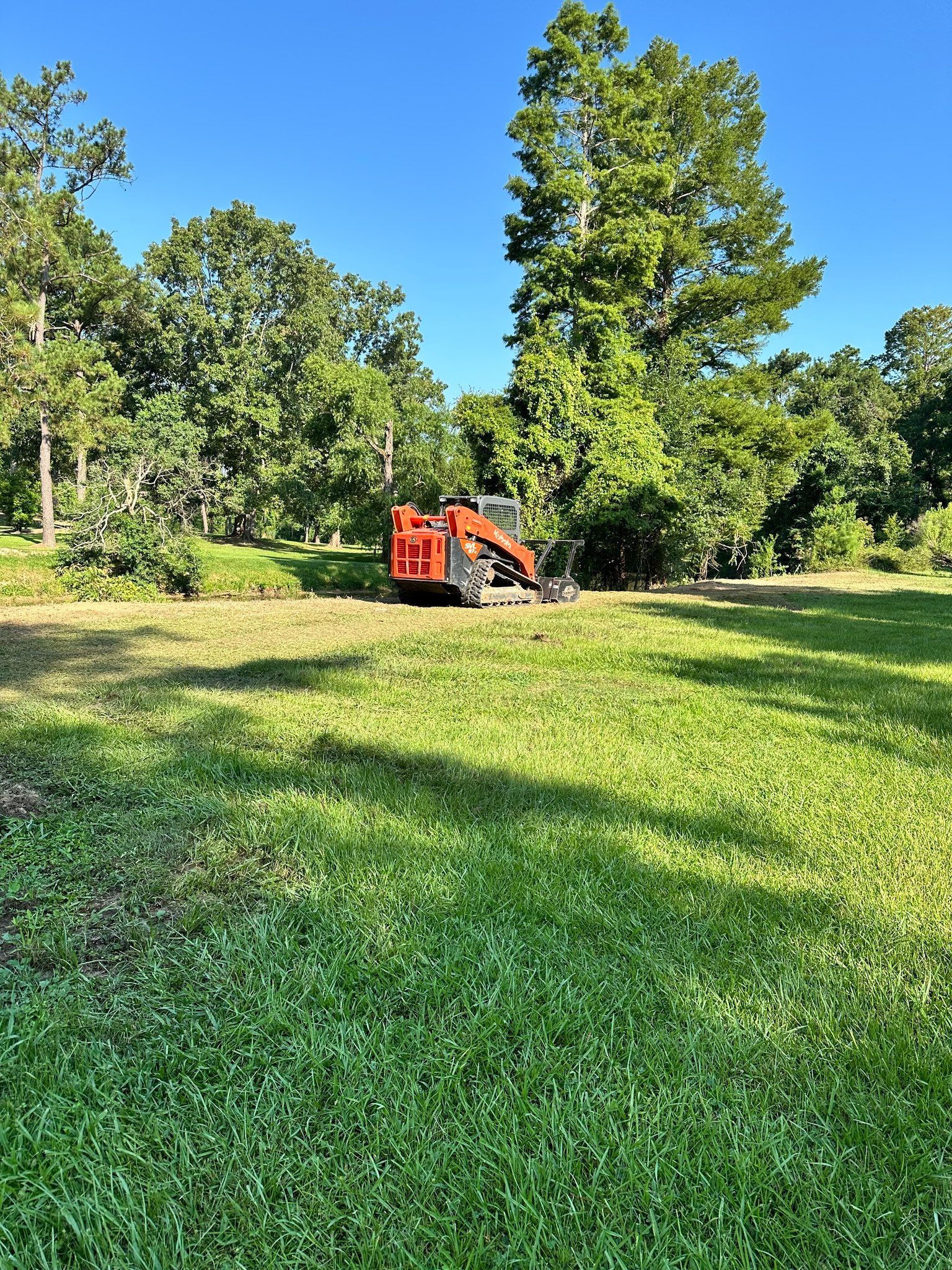
Clear Paths for Infrastructure and Boundaries
Utility & Fence Line Clearing in Folsom for overgrowth blocking access to fence posts, power lines, and buried utilities
Southern Land Dynamics provides utility and fence line clearing for property owners across rural Folsom who need clean, maintained access corridors for fencing installation, utility maintenance, and boundary definition. If you own acreage where dense brush and overgrowth are blocking fence lines or making it difficult for crews to reach meters, boxes, or underground lines, this service removes that vegetation and restores clear, wide paths that stay accessible. Landowners preparing for fence builds or utility work often find that the problem is not the installation itself but the thick weeds, vines, and saplings that have overtaken the corridor over time.
This work involves cutting and removing vegetation along straight, narrow paths that follow property boundaries or utility easements. Equipment is selected based on terrain width and density, and the cut material is either mulched in place or removed depending on your site conditions and access requirements. In rural Folsom, where properties often include wooded edges and unmaintained perimeters, overgrowth can interfere with fence tension, gate swing, and visibility for crews performing inspections or repairs. Clearing these corridors means utility contractors can drive equipment to the work zone without delay, and fencing teams can set posts without clearing by hand first.
Request clearing for your property lines or utility access and restore usable corridors across your land.
What Happens During and After Line Clearing
You start by walking the area with the crew or marking the route using flags, surveyor tape, or existing markers. The clearing width is determined by what needs to pass through, whether that is a crew truck, fence stretcher, or inspection vehicle. Brush mowers, forestry cutters, and chainsaw work are used depending on stem size and density, and the goal is to leave a level surface that remains stable for walking or driving without creating ruts or bare soil that erodes after rain.
Once the corridor is cleared, you will see a defined path that runs straight along your boundary or utility line. Fence installers can move quickly without stopping to cut, utility crews can access poles and junction boxes without bushwhacking, and you can walk the property line without fighting through undergrowth. Southern Land Dynamics works on projects ranging from single fence runs to multi-acre easement corridors, and the result is always improved access and reduced maintenance burden.
Vegetation will regrow over time, especially in humid growing seasons, so some property owners schedule seasonal maintenance to keep corridors open. This service does not include grading, gravel installation, or stump grinding unless specifically arranged. It focuses on above-ground vegetation removal that restores function to infrastructure zones and property edges.
Questions About Clearing Fence and Utility Lines
Landowners in Folsom often ask about timing, width standards, and how the work affects existing infrastructure.
What width is typical for a utility clearing?
Most utility easements require a corridor between ten and twenty feet wide depending on the type of line and vehicle access needs, though fence lines may only need six to eight feet if no equipment will travel the path.
How do you avoid damaging buried lines during clearing?
Surface vegetation is cut at or above ground level using mowers and cutters that do not dig into the soil, and any trenching or grading work is avoided unless utilities have been marked by locators.
When is the best time to schedule this work in Folsom?
Late fall through early spring offers the driest ground and slowest regrowth, making it easier to access wet areas and reducing how quickly brush returns after clearing.
Why does overgrowth return faster along fence lines?
Fence corridors often run along property edges where sunlight reaches the ground after canopy clearing, and seeds from adjacent wooded areas germinate quickly in the open soil and mulch layer.
What happens to the cut material?
Smaller stems and leaves are typically mulched in place to decompose, while larger limbs and logs are either chipped, stacked along the edge, or hauled away depending on your preference and site access.
Southern Land Dynamics works with landowners who need their property lines and utility corridors maintained for ongoing access and compliance. Contact the team to schedule clearing and restore function to overgrown infrastructure zones across your property.