
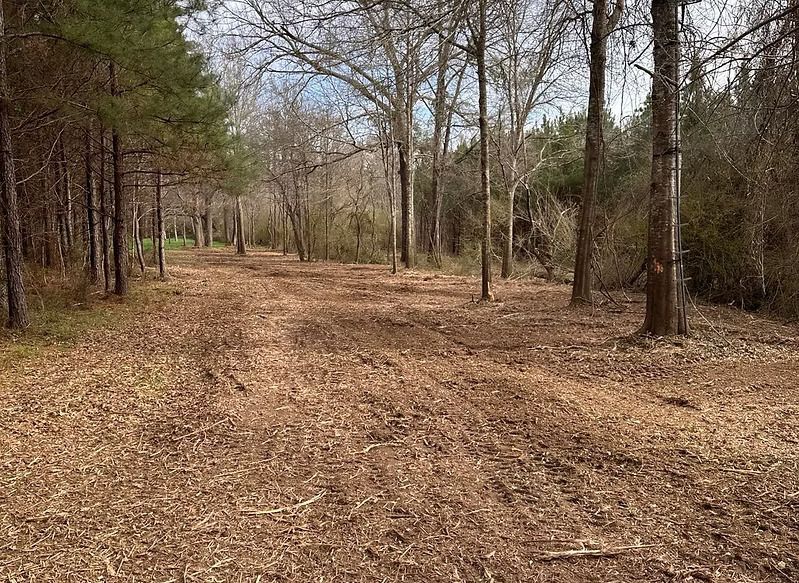
Open and Maintain Right-of-Way Corridors
ROW Clearing in Folsom for roads, easements, and access paths obstructed by years of unmanaged growth
Southern Land Dynamics performs right-of-way clearing for contractors, developers, municipalities, and rural property owners across Folsom who need vegetation removed from roads, utility corridors, drainage easements, and shared access paths. When a right-of-way has been neglected and brush has closed in on the roadbed or encroached into the travel lane, visibility drops and maintenance vehicles cannot pass safely. This service cuts back that growth and restores the corridor to its intended width, whether that means clearing a private drive shared by multiple landowners or opening a utility easement that has not been maintained in a decade.
The process begins with defining the corridor boundaries using survey markers, recorded easement dimensions, or visible infrastructure like power poles and culverts. Crews use tracked mowers, excavators with brush cutters, and chainsaws to remove saplings, vines, and dense undergrowth that has grown into the traveled surface or overhead clearance zone. In Folsom, where humid conditions and frequent rain promote fast regrowth, right-of-way corridors can become impassable in just a few seasons if not maintained. Clearing restores sight lines for drivers, allows service trucks to reach infrastructure without damage, and reduces the risk of limbs contacting overhead lines during storms.
Contact for large-scale or ongoing ROW projects and keep your corridors open and accessible year-round.
How Right-of-Way Work Is Managed Over Time
You meet with the crew to review the corridor length, width requirements, and any obstacles such as gates, culverts, or guy wires that must remain undisturbed. Clearing may involve removing fallen trees that have blocked the path, cutting back side growth that has narrowed the lane, and trimming canopy branches that hang below the required vertical clearance. Equipment selection depends on terrain, access width, and whether the work requires selective hand cutting or full mechanized clearing.
After the work is finished, you will see a corridor that is wide enough for vehicles to pass without scraping mirrors or fenders, with clear sight lines at curves and intersections. Drainage ditches are visible again, utility poles are accessible from both sides, and contractors can drive service trucks without cutting their way in. Southern Land Dynamics handles both one-time clearing for development or infrastructure installation and recurring maintenance contracts that keep corridors open through multiple growing seasons.
Ongoing maintenance is common for shared driveways, pipeline easements, and municipal road shoulders where regrowth must be managed annually or biannually. This service does not include road surfacing, ditch grading, or utility line work unless coordinated with other trades. The focus remains on vegetation removal that supports access, visibility, and infrastructure protection.
Common Questions About ROW Maintenance
Clients working on right-of-way projects in Folsom often need clarity on scope, timing, and coordination with other work.
What defines the boundaries of a right-of-way?
Boundaries are typically set by recorded easement documents, survey plats, or visible markers such as fences and utility poles, and clearing stays within those limits unless otherwise directed by the property owner or easement holder.
How do you clear around existing infrastructure without causing damage?
Crews work around poles, guy wires, meter boxes, and culverts using hand tools and selective cutting techniques, and any infrastructure that could be impacted is flagged before equipment enters the area.
When should ROW clearing be scheduled for new construction projects?
Clearing should happen after surveying and staking but before grading or utility installation, so contractors have a clean corridor to work in and equipment can access the site without delays.
Why does vegetation grow back faster along ROW corridors in Folsom?
Cleared corridors receive more sunlight than surrounding wooded areas, and the combination of warmth, moisture, and disturbed soil creates ideal conditions for fast regrowth of grasses, vines, and pioneer species like sweetgum and pine seedlings.
What happens to debris after clearing?
Brush is typically mulched on-site or piled along the corridor edge for later chipping or burning, depending on site access, local regulations, and whether you want the material removed or left to decompose.
Southern Land Dynamics works with property owners and contractors who need right-of-way corridors cleared and maintained across varied terrain and project timelines. Reach out to schedule clearing and keep your access paths open and functional through every season.