Reduce Fire Risk Around Structures and Property
Fire Mitigation in Folsom for homes surrounded by dense brush, dry leaves, and overgrown vegetation that increases wildfire exposure
Southern Land Dynamics offers fire mitigation services for homeowners and landowners in Folsom who need to reduce fire hazards around structures, outbuildings, and property perimeters. When your home is surrounded by thick undergrowth, fallen limbs, and vegetation that has grown up against siding or within a few feet of the foundation, you are creating fuel pathways that allow fire to spread rapidly from the woods to the building. This service removes that excess vegetation and creates defensible space that slows fire movement and gives firefighters room to work if a wildfire reaches your property.
The work involves cutting and removing brush, saplings, vines, and dead material within a defined zone around structures, typically starting at the foundation and extending outward in layers based on slope, vegetation density, and local fire risk. In wooded areas of Folsom, where humidity keeps fuels moist much of the year, fire risk spikes during dry seasons when fallen leaves, pine straw, and dense underbrush dry out and become highly flammable. Clearing reduces the volume of fuel available to burn and breaks up continuous vegetation that would otherwise carry flames from the forest floor to tree canopies and rooflines.
Schedule a fire risk reduction assessment and create safer conditions around your home and property.
What Fire Mitigation Work Includes and Changes
You begin by walking the property with the crew to identify high-risk zones, fuel accumulations, and areas where vegetation has grown too close to structures or propane tanks. Clearing is done in zones, with the area closest to the home receiving the most aggressive thinning and the outer zones managed to reduce ladder fuels and canopy continuity. Hand tools, brush mowers, and chainsaws are used depending on stem size and proximity to structures, and all cut material is removed or chipped to prevent it from becoming additional fuel on the ground.
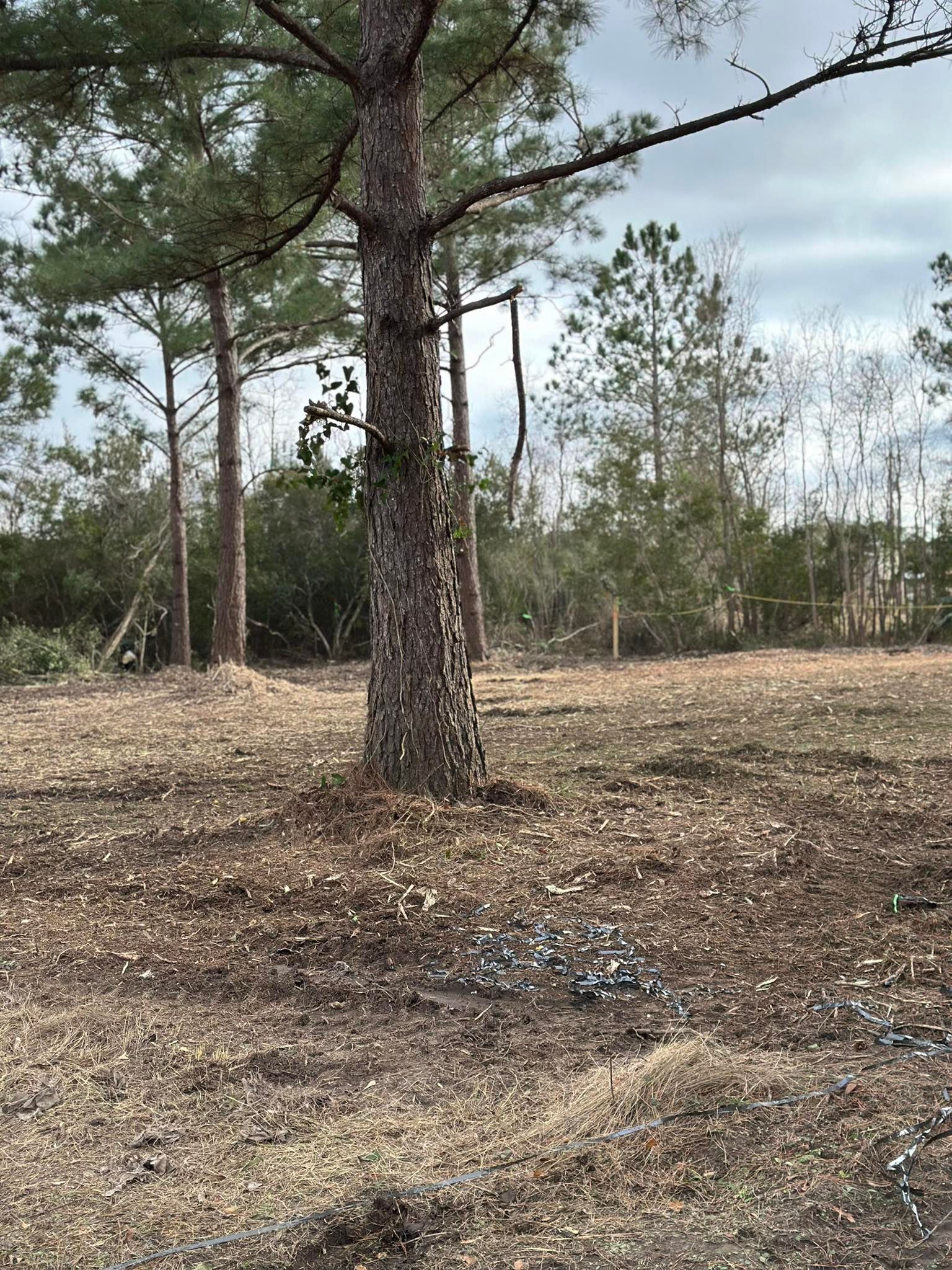
Once mitigation is complete, you will see clear space around your home with reduced undergrowth, thinned saplings, and no vegetation touching the structure. The ground will have less leaf litter and fallen debris, and sight lines will extend farther into the surrounding woods. Southern Land Dynamics tailors the clearing intensity to match your fire risk level, property layout, and aesthetic preferences, so the result is functional without turning your land into a barren clearing.
Fire mitigation does not eliminate all risk, but it significantly reduces the likelihood of structure ignition and improves survivability if a wildfire moves through the area. This service does not include tree removal unless trees are dead, diseased, or pose a direct ignition hazard, and it does not replace roofing, siding, or vent upgrades that also contribute to fire resistance..
Understanding Fire Risk Reduction on Your Property
Homeowners in Folsom often have questions about what gets removed, how far clearing should extend, and how to maintain defensible space over time.
What is defensible space and how far should it extend?
Defensible space is a buffer zone around structures where vegetation is reduced or removed to slow fire spread, and most recommendations call for at least thirty feet of intensive clearing with additional thinning extending up to one hundred feet depending on slope and fuel type.
How do you decide what vegetation to remove?
Crews remove dead plants, dense brush, low-hanging branches, and anything growing within five feet of the structure, while thinning remaining trees and shrubs to create spacing that prevents fire from jumping between plants.
When is the best time to do fire mitigation work in Folsom?
Late winter and early spring are ideal because vegetation is dormant, fire risk is lower, and you have time to complete the work before dry conditions return in summer and fall.
Why does fire risk increase even in humid areas like Folsom?
Humidity keeps fuels moist most of the year, but extended dry periods or drought conditions can quickly dry out leaf litter, dead wood, and understory plants, turning normally damp forests into flammable landscapes.
What happens to the cleared material?
All cut brush, limbs, and debris are either chipped on-site, hauled away, or piled for controlled burning if local regulations and conditions allow, so no additional fuel is left on the ground near the home.
Southern Land Dynamics works with property owners who want to reduce fire hazards and improve the safety of their homes and land. Contact the team to schedule mitigation work and build defensible space that lasts through fire season and beyond.